
Take a Closer Look at the Foundation of Oakland: Bricks (Part 5)
By Ashley Shares, Director of Preservation
Back near the northwest corner of Oakland Cemetery, there is a small section of pathway where the bricks look much different than elsewhere.
They are larger and more robust. They appear polished, and their color is deeper, darker, and more vibrant. But their most obvious distinction is that they are stamped with the word “Rockmart”, leaving little mystery as to their origin: Rockmart, Georgia, a small town about 60 miles west of Atlanta, built around the slate quarrying industry (even their local newspaper was called the Rockmart Slate for a while!)
I can hear you thinking, “but what does slate have to do with bricks, Ashley? I thought bricks were made from clay!”. Don’t worry...we’ll get there.
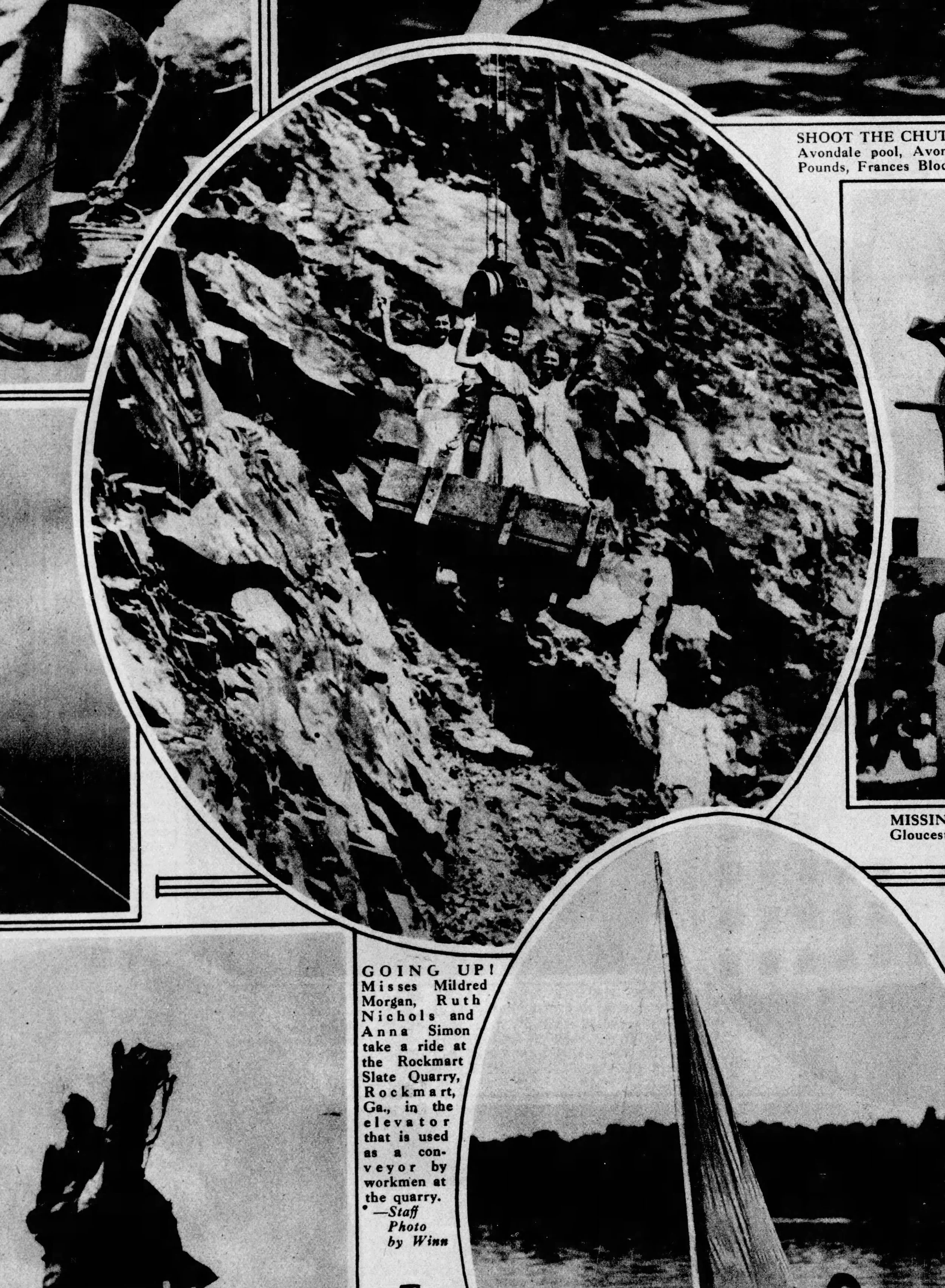
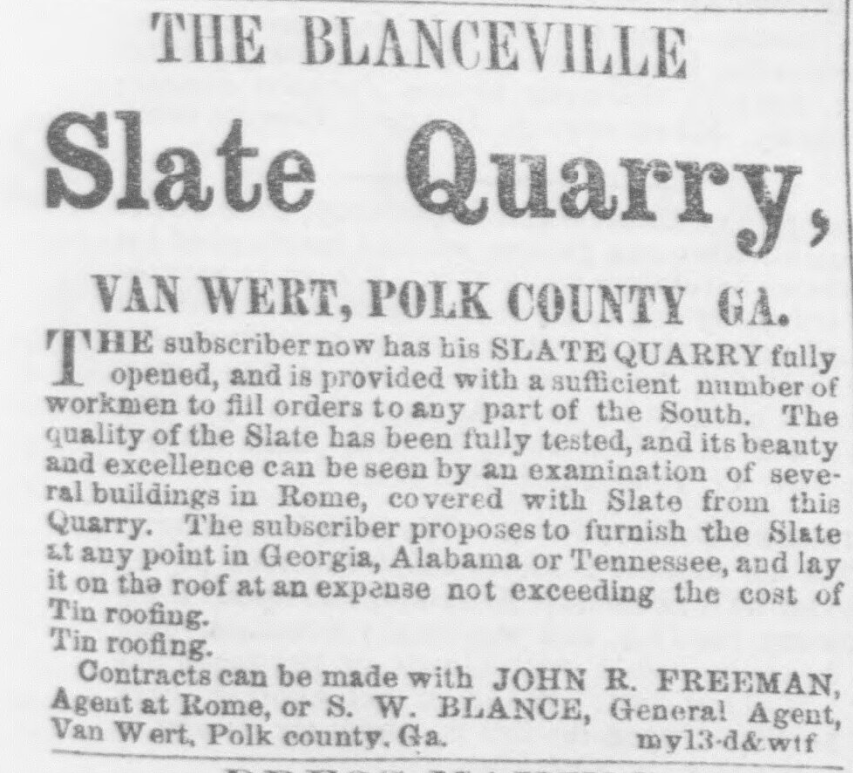
Slate is a metamorphic rock, meaning that is was formed when another rock (the parent rock) underwent mineralogic changes due to intense heat and pressure in a geological setting. Slate was first mined in the Rockmart area in the 1850s by the Blanceville Slate and Mining Company, named for and owned by Joseph Blance, a farmer originally from Savannah who allegedly discovered the slate vein while driving a stake to tether livestock.
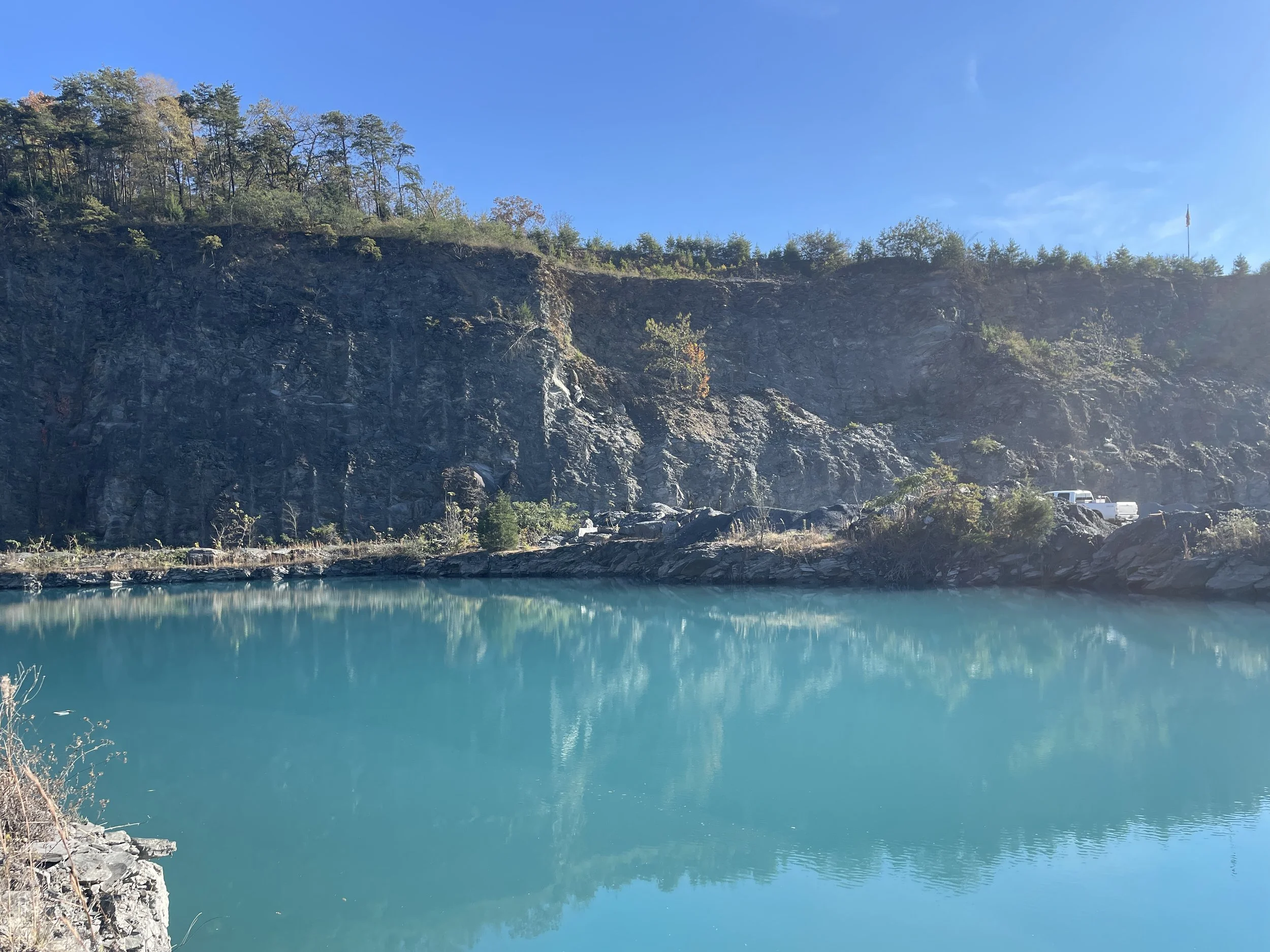
From there, Welsh quarrymen flocked to the region and lent their centuries of expertise to the laborious endeavor of mining and cutting slate. During the Civil War, slate from three distinct quarries was used to build armories and other structures, but all commercial activities ceased until the mines were re-opened in the 1880s, where slate roofing production flourished and sustained the town until around 1900. At this point, slate roofing was falling out of popularity, and the shift was made to brick production.
The historic record is fuzzy, but Rockmart Brick and Slate Company likely began operation in 1911, when Augusta businessmen took over an older operation: Monarch Brick, which opened around 1900. The operation was short-lived as far as brick operations go, going bankrupt in 1922 and selling their equipment in 1924.
However, there are scattered references to both Monarch Brick and Rockmart Brick until 1929 so it’s safe to assume brick production continued, perhaps at a smaller scale. Slate production continued to slow and the quarries opened and closed periodically. In 1952, the Georgia Lightweight Aggregate Company took over the quarries. Today, the quarries are operated by the Rockmart Slate Corporation of Georgia.
Although bricks haven’t been produced in Rockmart in 100 years, the bricks that were shipped out to places like Atlanta are holding up incredibly well. This has to do with the materials and methods of their production. Unlike older brick-making methods (pulling wet clay from a creek or river and firing it unevenly), Rockmart bricks were made in a vitrification process. First, weathered and crumbly slate and shale (the parent rock of slate in the metamorphic process) is crushed to powder and then slaked (wet down) to form clay. This slaking process can take hours or weeks, depending on the slate. When the bricks are placed in a kiln, they are fired at such a high temperature and alongside different chemicals that the particles become molten. This takes away all pore space, resulting in an ultra-hard and water-resistant brick ideal for outdoor use. Rockmart produced both bricks and paver blocks, which are a little bigger and thicker than a common brick.
If you visit Oakland, you’ll clearly notice that Rockmart Bricks are in by far the best condition, with little-no wear or breakage compared to other brick types.
